
The Ancient Language of Sigils
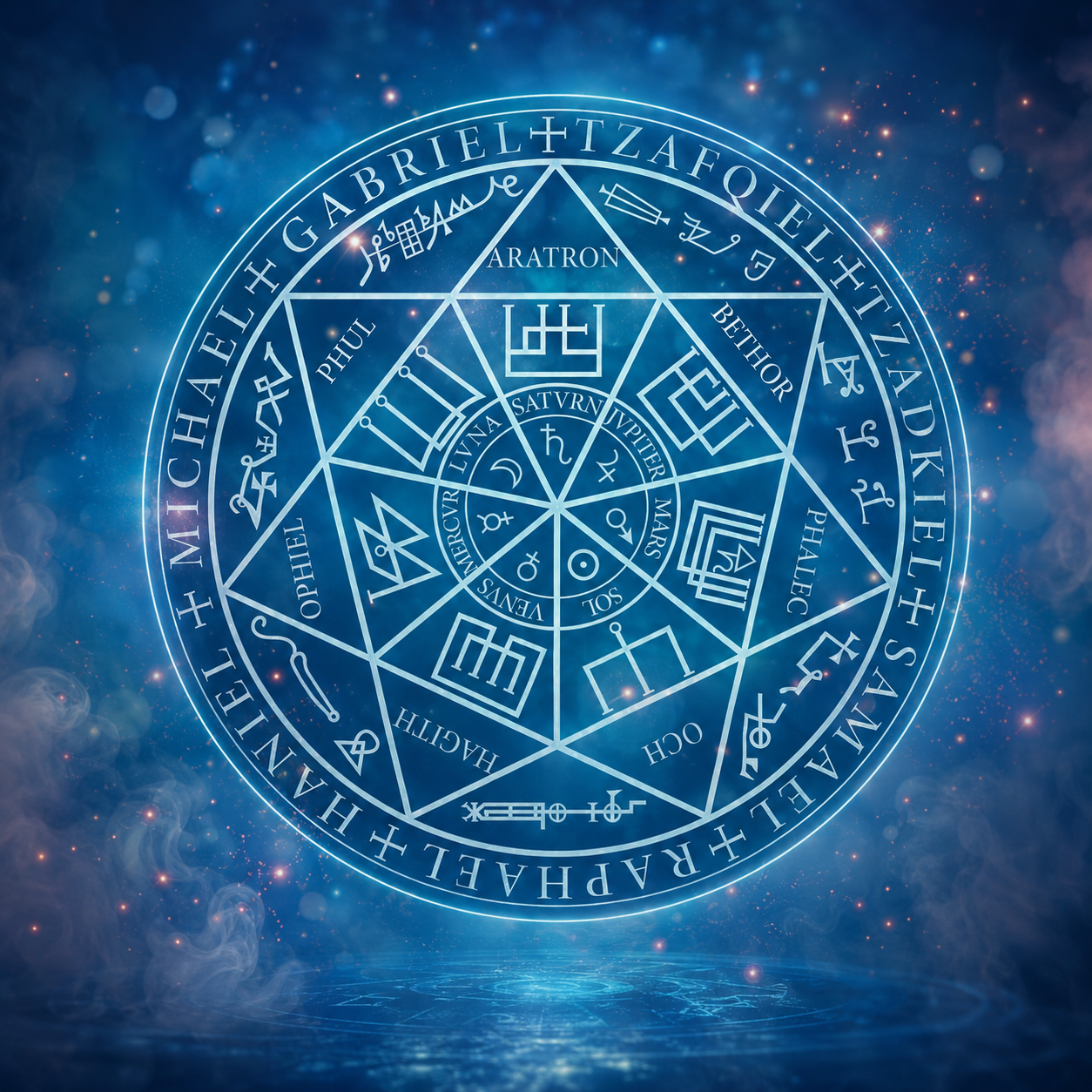
Long before modern alphabets and printed books, humanity spoke through symbols. A single mark carved into stone could invoke protection. A circle etched in ash could become a prayer. A geometric design inked onto parchment might serve as a doorway between the mortal and the divine. These sacred markings became known as sigils.
The word sigil comes from the Latin sigillum, meaning “seal.” In medieval and esoteric traditions, sigils were believed to contain intention, spiritual authority, or hidden power. Some were used for protection. Others for invocation, healing, guidance, or communion with divine beings.
Across countless cultures, symbols have always carried meaning beyond language itself. The Celts carved spirals and knotwork into standing stones. Alchemists encoded spiritual truths into geometric emblems. Mystics and scribes preserved sacred signs believed to bridge the seen and unseen worlds.
The Sigils of the Seven Archangels
Among the most fascinating to me are the sigils associated with the Seven Archangels. I dove deeply into the esoteric teaching of these higher life forms through the remarkable book The Seven Sacred Seals by Richard Rudd, “a passage into the world of Illumination, into the fabric of light that stitches both time and space together, and that will lead us one day into immensity, into that limitless world that we call the Divine.”
In many occult and mystical traditions—particularly Renaissance ceremonial magic and older Solomonic texts—each archangel was believed to possess a sacred seal or sigil. These intricate symbols were not worshipped in themselves, but understood as spiritual signatures: representations of divine attributes and cosmic forces.
Michael’s sigil was associated with courage, truth, and protection. Raphael’s with healing and wisdom. Gabriel’s with visions, messages, and divine revelation. To medieval minds, these symbols were not merely decorative. They were living mysteries.
Sigils, Sacred Geometry, and Forgotten Wisdom
This intersection between sacred geometry, ancient spirituality, and hidden knowledge deeply influenced my own writing—particularly within The Evensong Enchantments and even more so in the upcoming prequel, Way Keeper. In the world of the Old Ways, sigils are more than symbols. They are remnants of forgotten wisdom, echoes of a time when language itself was believed to possess power.
If you have read The Evensong Enchantments trilogy, you may already recognize traces of this through the sacred markings and prophetic symbols woven throughout Ena’s journey. But in Way Keeper, I explore these ideas far more deeply—especially the relationship between sigils, memory, spiritual inheritance, and the preservation of sacred knowledge in an age increasingly ruled by fear and control.
Why Symbols Were Feared
Throughout history, symbols have always frightened those who seek dominion. A sigil is, in many ways, an act of remembrance.
A way of saying:
There are truths older than empires.
Older than institutions.
Older even than fear.
And perhaps that is why these symbols continue to fascinate us today. Even now, something ancient stirs within us when we encounter them. Not because we fully understand them. But because some part of us remembers.
A Glimpse Into Way Keeper
Way Keeper, the first book in the Moonstone Trilogy prequel, delves more deeply into the forgotten language of sigils, runes, prophecy, and the hidden wisdom buried beneath medieval France.
At the heart of the story lies an ancient tension between memory and control—between those who seek to preserve sacred knowledge and those who fear its power. Through Lucian’s journey (a boy of only 12 in this first book of the trilogy) , I create a world where symbols are not passive markings upon parchment or stone, but living vessels of meaning, intention, and spiritual inheritance.
In the first act, seven runes are discovered by Lucian within Olguin’s hut, each etched with its own mysterious sigil. Some whisper of protection. Others of revelation. And some carry truths that were never meant to be unearthed.
As Lucian steps beyond the safety of the Old Grove and into a rapidly changing world ruled increasingly by crown and Church, he begins to uncover what the ancient Druids always believed:
That language itself can shape reality.
That memory can survive through symbol.
And that certain truths refuse to remain buried forever.
With wonder and moonlight,
Helyn 🌙